
Originally from Texas, Dr. Bennett made Washington home in 2016 when he joined Creekside Dental. A Baylor College of Dentistry graduate, he now serves as Clinical Director, where he’s known for raising clinical standards, embracing new technology, and sharing his passion for dentistry with patients and colleagues alike. Under his leadership, Creekside Dental has earned recognition as an Invisalign Gold Provider and is an active member of the American Academy of Clear Aligners (AACA), reflecting the team’s commitment to excellence in clear aligner treatment.
Beyond the office, Dr. Bennett is a dedicated family man, sharing his life with his wife and five children. He’s a foodie who loves to cook, a cyclist who enjoys the open road, and someone who never says no to a hug. At Creekside Dental, he’s thrilled to help patients achieve healthy, confident smiles.
Maintaining a crystal-clear smile goes beyond the treatment phase. Once you have completed your journey to straighter teeth, your Invisalign retainers become the most important tool in your arsenal. They hold your teeth in their new, ideal positions, preventing the natural tendency for teeth to shift back over time. However, because these retainers spend so much time in your mouth, they can quickly become a breeding ground for bacteria, plaque, and tartar if not cared for properly.
At Creekside Dental, Dr. Bennett emphasizes that a clean retainer is essential not just for the aesthetics of your smile but for your overall oral health. If you are wondering how to keep your investment looking brand new, this comprehensive guide will walk you through everything you need to know about cleaning your Invisalign retainers.
Why Retainer Hygiene Matters
Your mouth is home to hundreds of types of bacteria. When you wear a retainer, these microorganisms, along with saliva and proteins, attach to the plastic surface. Over time, this forms a biofilm. If left uncleaned, this biofilm hardens into tartar (calculus), which is much harder to remove and can give the retainer a cloudy, yellowish appearance. This is why following proper Invisalign maintenance guidance in Kennewick is important to keep your retainer clean and clear.
Dirty retainers can lead to:
- Persistent Bad Breath: Bacteria trapped against the plastic produce foul-smelling gases.
- Tooth Decay: Trapping sugar or bacteria against your enamel for hours at a time increases the risk of cavities.
- Gum Irritation: Plaque buildup along the edges of the retainer can irritate your gums.
The Daily Cleaning Routine
Dr. Bennett recommends a simple, consistent daily routine to keep your retainers in top shape. Consistency is the secret to preventing deep stains and odors.
1. The Morning Rinse
As soon as you wake up, remove your retainers and rinse them thoroughly under lukewarm water. This flushes away the saliva and plaque that accumulated while you slept. Never use hot water, as it can warp the medical-grade plastic, ruining the device’s precise fit.
2. Gentle Brushing
Use a soft-bristled toothbrush dedicated solely to your retainers. Apply a small amount of clear, mild liquid dish soap or a non-abrasive denture paste. Gently brush both the interior and exterior surfaces. Be careful not to scrub too aggressively, as microscopic scratches can make the plastic look cloudy and provide even more hiding spots for bacteria. Following daily aligner hygiene tips in Kennewick can help you keep your retainers clean and clear.
3. Deep Soaking
At least once a day, or a few times a week, depending on your lifestyle, give your retainers a “bath.” Using specialized cleaning crystals or a professional retainer soaking solution helps reach the tiny crevices that a toothbrush might miss.
Recommended Cleaning Agents
Not all cleaning products are created equal. Using the wrong chemicals can degrade the material of your Invisalign retainers. Here is what Dr. Bennett suggests:
- Invisalign Cleaning Crystals These are specifically designed by the makers of Invisalign. They are the gold standard for removing plaque and keeping the plastic transparent. Dissolve a packet in water and soak your retainers for about 15 minutes.
- Mild Clear Dish Soap It may sound simple, but a clear, antibacterial dish soap, as recommended in retainer care guidance by Dr. Bennett, is one of the most effective ways to break down oils and bacteria without scratching the retainer. Ensure the soap is clear to avoid any potential staining from artificial dyes.
- Distilled White Vinegar For a natural approach, a mixture of one part white vinegar to three parts lukewarm water can help dissolve mineral buildup. Soak for 15 to 20 minutes, then brush and rinse thoroughly to remove the vinegar scent.
- Baking Soda A paste made of baking soda and water can help neutralize odors. Baking soda is minimally abrasive and excellent at balancing the pH levels around the retainer.
What to Avoid: Common Mistakes
In an effort to get retainers “extra clean,” many patients end up damaging them. To protect your smile, stay away from the following:
- Colored Mouthwashes: Most mouthwashes contain dyes (blue, green, or red). Soaking your retainers in these can result in a permanent tint, making your teeth look discolored when you wear them.
- Boiling Water: High heat is the enemy of thermoplastic. Using boiling water to “sterilize” the retainer will likely cause it to melt or warp, requiring an expensive replacement.
- Toothpaste: While great for your teeth, most toothpastes contain abrasive particles (such as silica) designed to scrub away enamel. These particles will create tiny scratches on your retainers, making them look dull and cloudy.
- Bleach or Harsh Chemicals: Never use bleach or alcohol-based cleaners. These are toxic if not rinsed thoroughly and can compromise the integrity of the retainer material.
Dealing with Stubborn Buildup
If you notice white, crusty spots on your retainer that won’t budge with regular brushing, you are likely dealing with tartar. Since tartar is mineralized plaque, it requires a slightly more acidic environment to break down.
If a vinegar soak doesn’t work, Dr. Bennett recommends bringing your retainers into Creekside Dental during your next checkup for a retainer care consultation with Dr. Bennett. We have professional-grade ultrasonic cleaners that use high-frequency sound waves and specialized solutions to vibrate the tartar off the surface without damaging the plastic.
Storage and Travel Tips
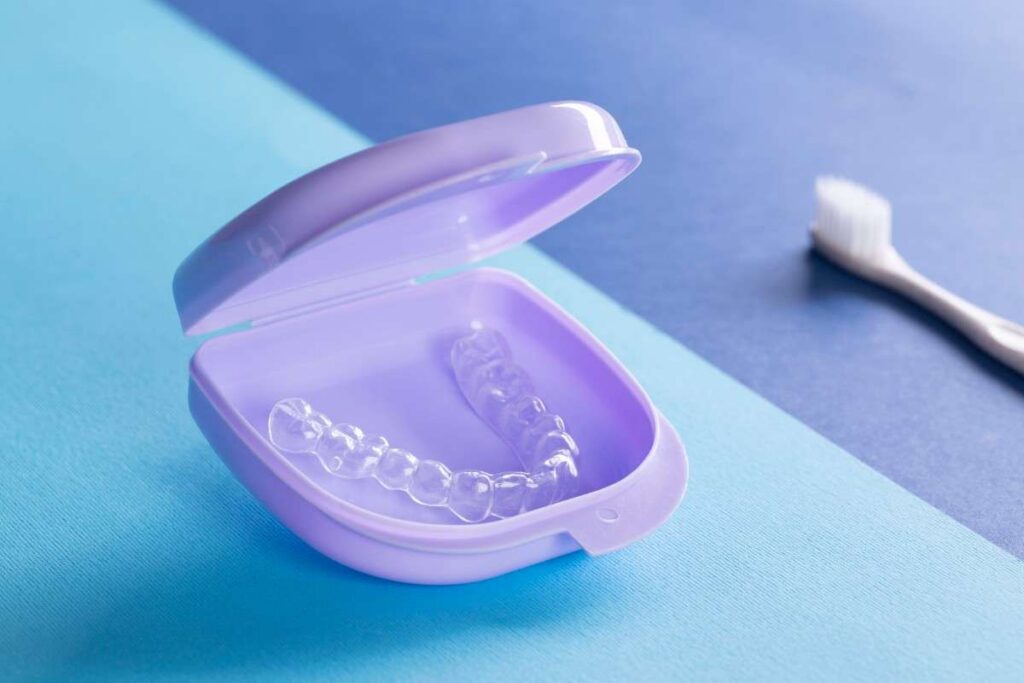
When your retainers are not in your mouth, they should be in their protective case. Many retainers are lost because they were wrapped in a napkin at a restaurant or left on a bedside table where a pet could reach them.
- Dry Them First: Before closing the case, try to pat the retainers dry. A dark, damp, enclosed case is an ideal environment for mold and bacteria growth.
- Clean the Case: Your cleaning routine should include the storage case. Wash it once a week with warm, soapy water to ensure it stays as clean as the retainers it holds.
Real Stories, Real Community Impact
Patients often share that their Invisalign journeys are transformative, both physically and emotionally. These stories reflect the trust built through transparency, innovation, and patient-first care.
If you want to hear directly from patients, explore their experiences on the Reviews page.
For directions, use this helpful Google Map or get step-by-step navigation through Get Directions.
FAQ’s
1. How often should I clean my Invisalign retainers?
You should rinse them every time you take them out and give them a thorough brushing at least once a day. A deep soak should be performed daily or at least several times a week to maintain maximum clarity.
2. Can I use a denture cleaner for my retainers?
Yes, most denture cleaners are safe for Invisalign retainers. However, check the labels to ensure they are non-corrosive and avoid soaking them for longer than the recommended time, as some denture cleaners can be slightly more aggressive than specialized retainer cleaners.
3. Why is my retainer turning yellow even though I clean it?
Yellowing is usually caused by a buildup of dried saliva and bacteria (biofilm) or exposure to colored liquids. If regular brushing isn’t working, try a 20-minute soak in a vinegar-and-water solution or use Invisalign cleaning crystals.
4. Is it okay to use an electric toothbrush on my retainer?
It is generally better to use a manual, soft-bristle toothbrush. The high-speed vibrations and power of an electric toothbrush can be too abrasive for the plastic, causing unnecessary wear or cloudiness over time.
5. How long do Invisalign retainers last before they need to be replaced?
With excellent care and cleaning, a set of retainers can last several years. However, they do eventually experience wear and tear. If you notice cracks, significant thinning, or if they no longer fit snugly, it is time to see Dr. Bennett for a new set.
Achieving Long-Term Success with Your Smile
Keeping your Invisalign retainers clean is vital to your post-treatment journey. By following the advice of Dr. Bennett and the team at Creekside Dental, you can ensure that your retainers remain invisible, odorless, and effective with proper Invisalign maintenance guidance in Kennewick. A few minutes of daily maintenance protects your oral health and keeps your hard-earned smile looking its absolute best for years to come.
Remember: Always use lukewarm water and a soft-bristled brush to maintain the shape and clarity of your retainers.
Disclaimer: This blog is for informational purposes only and does not replace professional medical advice from your dentist. Always consult with Dr. Bennett for specific concerns regarding your orthodontic appliances.